Poojas outside the project premises
Lord Parashurama built 108 Bhagavathy temples across Kerala. According to the political leader's horoscope, 32 powerful Bhagavathy temples are selected — including Chotanikara Bhagavathy, Attukal Bhagavathy and Mandaikadu Bhagavathi. With Lord Guruji's sankalpam, poojas and archanas are booked in the client's name morning, afternoon and night at all 32 temples, concurrently, from the first day of the project until its conclusion.
Gaja Pooja
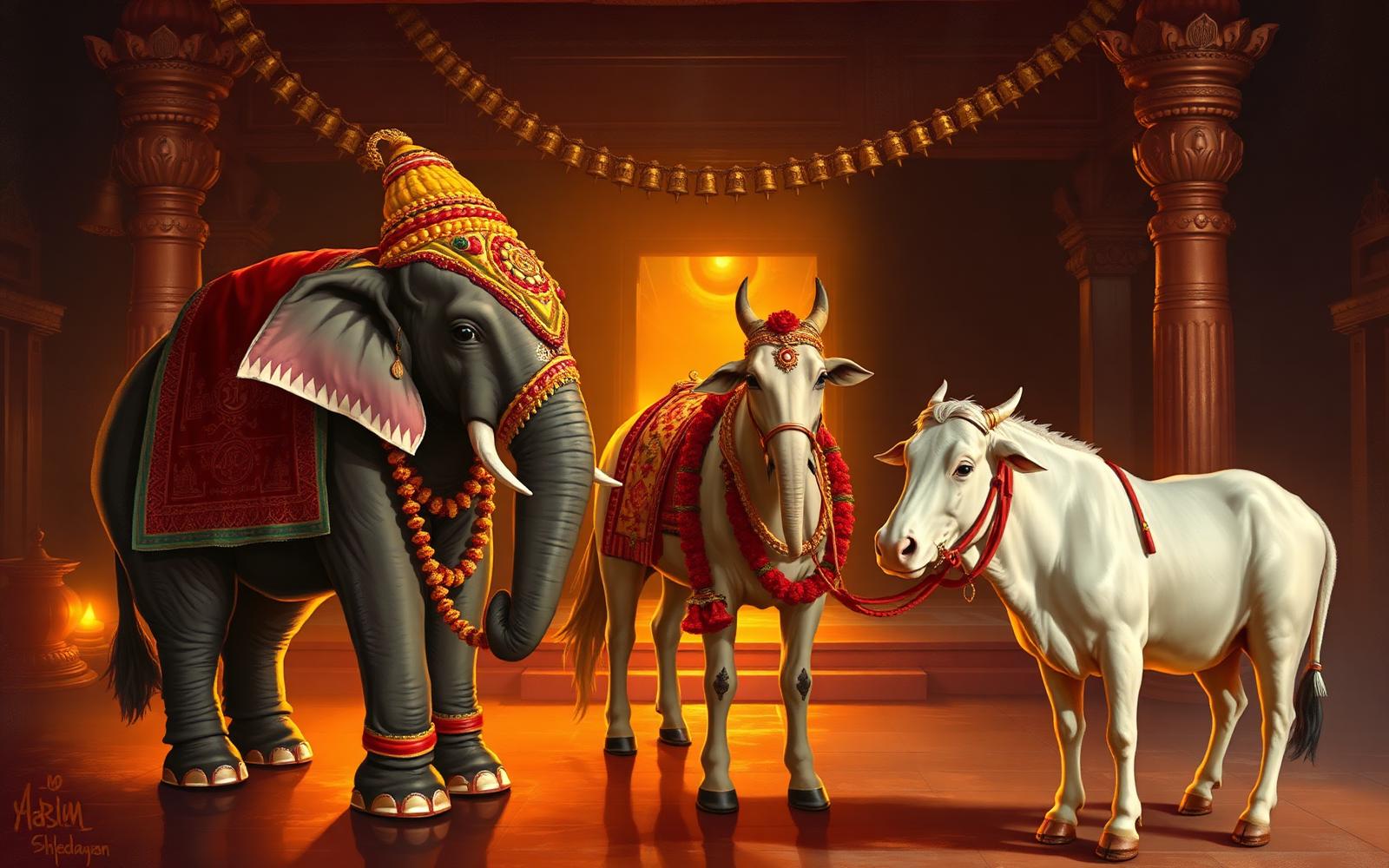
Gaja Pooja is specified as an essential pooja for seating the client on the Rajya Paripalana. The yoga obtained from it is known as Gaja Kesari Yoga — the yoga of the ruler who rides an elephant beneath a white parasol and travels through the streets. Gaja Pooja assists in the rule of government and removes obstacles in government-related circumstances.
Every Thursday until the project concludes, a special pooja is conducted for every elephant present in the 32 Bhagavathy temples. Pooja rituals, an all-day food offering and Vastra charges are borne for each elephant.
Gho Pooja and Ashwa Pooja
On every auspicious day, Gho Pooja and Ashwa Pooja must be carried out inside the project premises using the holy white Ashwa and the Gho (Punganur cow and Swarna Kabila cow) of our Gurukul.
Every Friday after 8 pm, special Guruthi Poojas are conducted inside the temple premises without any public presence. These are held in complete confidentiality — only the Pradhan Tantric knows the pooja sankalpam. Photographs of the poojas are shared with the client.
This teaching is preserved and transmitted through the Sri Dattatreya – Sri Parashurama Guru Lineage by His Holiness Sri Guruji Durga Prasad Garu.